A “Free Luxury Giveaway” That’s Too Good to Be True
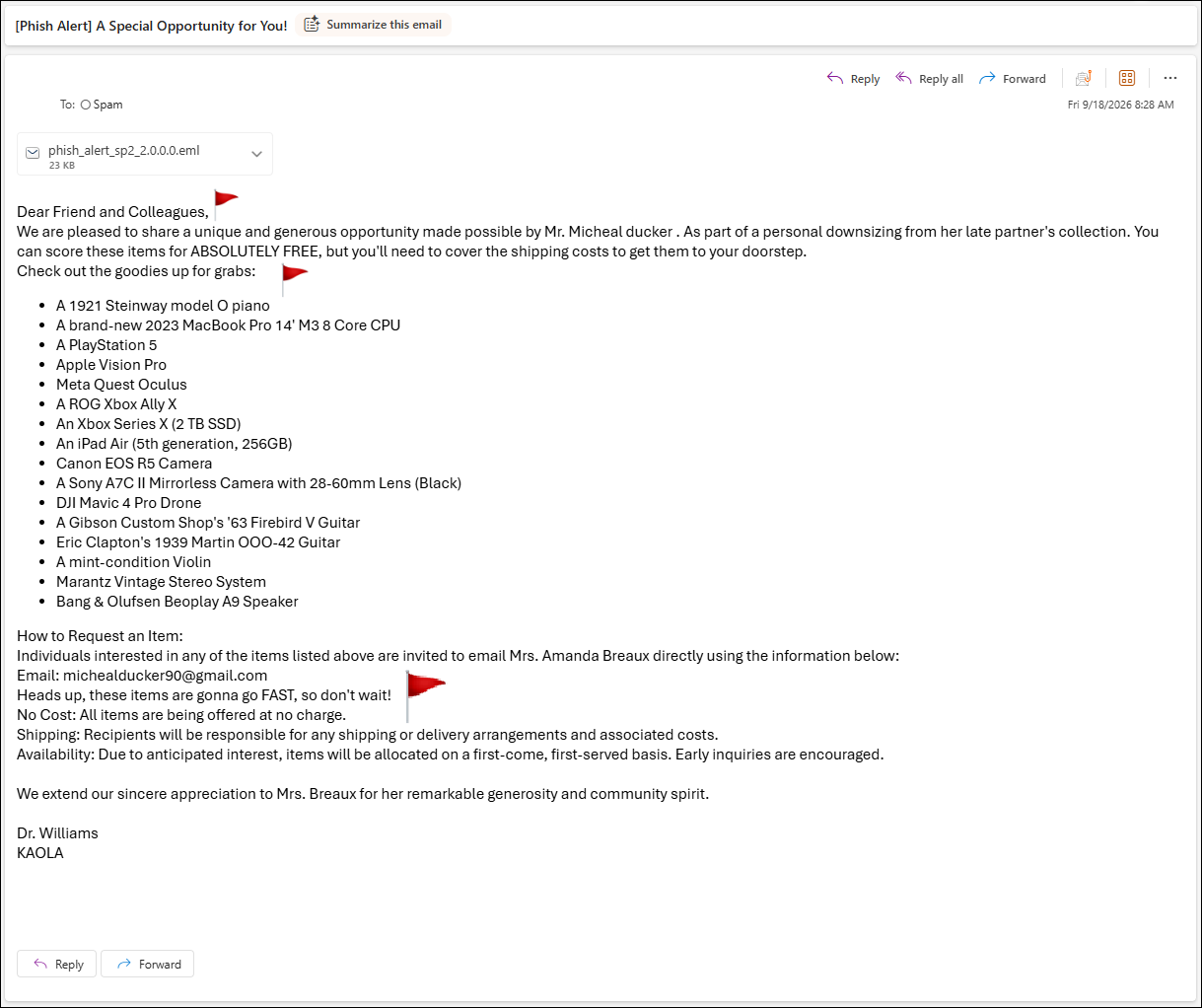
This email below has been confirmed as malicious or fraudulent by the Information Security department. If you have received this phishing email, do not open any attachments or follow the link(s) in the message; simply delete the email.The email below, subject-lined “A Special Opportunity for You!”, offers a long list of high-value, free items in exchange for covering shipping costs. While it may look like a genuine act of generosity, it exhibits several common phishing/scam red flags. An analysis is provided below.
Red Flags:
- Generic, impersonal greeting: “Dear Friend and Colleagues” addresses no one specifically; a hallmark of mass-distributed scam emails rather than personal correspondence.
- Inconsistent and confusing identities: The email can’t keep its own story straight: it’s introduced as an opportunity from “Mr. Micheal Ducker,” references “her late partner’s collection,” directs replies to “Mrs. Amanda Breaux,” and is signed “Dr. Williams.” Legitimate communications don’t juggle multiple unexplained names and mismatched pronouns.
- Too-good-to-be-true offer: A list of extremely high-value items (a vintage Steinway piano, a MacBook Pro, an Eric Clapton guitar, professional cameras, drones, etc.) being given away entirely for free is designed to override the recipient’s skepticism with excitement and greed.
- Classic “pay shipping” advance-fee scam structure: While the items are “free,” recipients are told they must cover shipping costs; this is the actual goal of the scam, extracting payment or payment/banking information under the guise of a shipping fee.
- Personal/free email address instead of an official one: Recipients are directed to reply to a Gmail address (“michealducker90@gmail.com”) rather than a verified business or organizational email, despite the email referencing multiple “official”-sounding names and titles.
- Manufactured urgency and scarcity: Phrases like “these items are gonna go FAST, so don’t wait!” and “first-come, first-served” are designed to rush recipients into acting before they think critically or verify the offer.
- Vague signature with no verifiable organization: “Dr. Williams, KAOLA” provides no legitimate business name, contact number, or way to confirm the sender’s identity or affiliation.
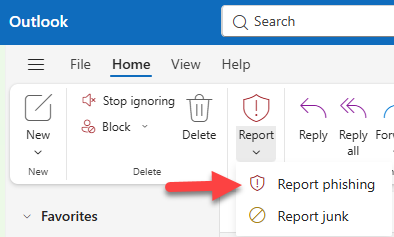
What to do: Do not reply or send any payment/shipping information. Click the “Report Phish” button in your email client to alert your IT/security team.